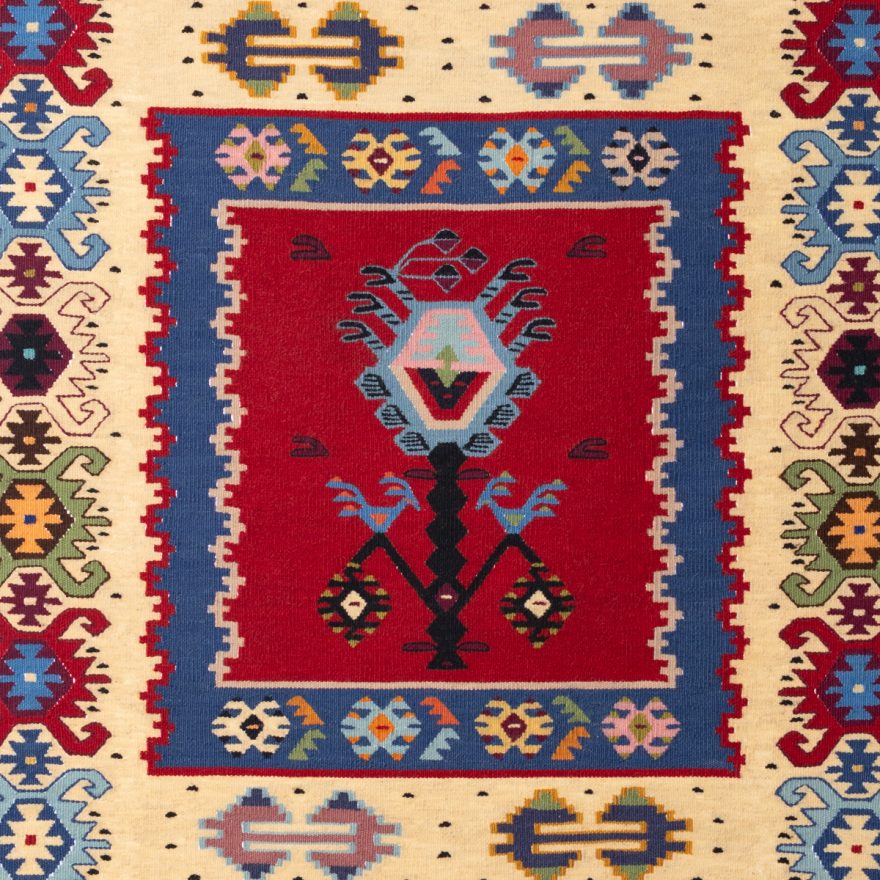
At first glance, a kilim and a rug can seem like two versions of the same thing: a textile placed on the floor to add warmth, colour and character to a room. Structurally, however, they can be very different. A traditional kilim is a flatwoven textile with no raised pile, while many conventional rugs are made with a pile that creates a softer, thicker surface.
That difference changes almost everything: how the textile feels underfoot, how it sits beneath furniture, how easy it is to move, how it should be cleaned and the kind of visual effect it creates in an interior. If you are comparing a Pirot kilim with a conventional pile rug, understanding the construction first will make the choice much easier.
Kilim vs Rug: The Short Answer
A kilim is a flatwoven textile. The design is created as the warp and weft are woven together, so the pattern is part of the structure itself. A conventional pile rug has fibres that rise above the foundation, creating a thicker and softer surface.
A kilim is about the weave; a pile rug is about the raised surface. Neither is automatically “better” — they simply behave differently in a room.
Kilim vs Rug at a Glance
| Feature | Flatwoven kilim | Typical pile rug |
|---|---|---|
| Surface | Flat, woven, low-profile | Raised fibres or pile |
| Feel underfoot | Firm and textile-like | Usually softer and more cushioned |
| Thickness | Thin and easy to layer | Often thicker |
| Pattern | Built into the weave | Created through pile, knots, tufting or other construction |
| Furniture clearance | Low profile works well under many pieces of furniture | Deep pile may require more clearance |
| Visual effect | Graphic, architectural, pattern-led | Soft, tactile and often more volumetric |
| Movement | Usually lighter and easier to reposition | Often heavier, depending on construction |
What Is a Kilim?
A kilim is a pileless, flatwoven textile made by interlacing warp and weft threads. Instead of attaching a decorative surface to an underlying structure, the structure and the decoration develop together. The geometry is woven into the textile itself.
This is one reason kilims often have a crisp, graphic appearance. Lines, diamonds, stepped forms and other geometric elements are created by changing colours and directions during weaving. In a traditional Pirot kilim, the visual language is inseparable from the technique used to produce it.
If you want to see how this works in practice, the guide to how a Pirot kilim is made explains the process from preparation and warping to hand-weaving and finishing.
What Is a Rug?
“Rug” is a broad category rather than one single construction method. A rug can be knotted, tufted, woven, hooked or made using other techniques. In everyday interior-design language, however, people often use the word “rug” to mean a textile floor covering with a raised pile.
That pile creates thickness and softness. Depending on the construction, it can range from very short and dense to long and plush. This makes many pile rugs particularly attractive in bedrooms and living spaces where softness underfoot is a priority.
The Main Structural Difference: Flatweave vs Pile
The decisive distinction is not the country of origin, the pattern or the colour palette. It is the surface construction.
Flatwoven structure
In a kilim, the warp and weft create a relatively flat plane. There is no separate layer of yarn projecting upward as pile. The textile therefore stays visually and physically close to the floor.
Pile structure
In a pile rug, fibres rise above the base. That extra vertical dimension gives the rug softness, depth and a more cushioned feel, but it also changes how dust, furniture and cleaning interact with the surface.
A textile can use geometric “kilim-style” motifs and still be a machine-made or pile rug. Construction tells you more than decorative resemblance.
How Does a Kilim Feel Underfoot?
A kilim feels firmer, flatter and more textile-like than a plush rug. You feel the floor beneath it more directly, which some people prefer because it gives a room a cleaner and more architectural character.
If you want a highly cushioned, soft sensation under bare feet, a deep pile rug will usually provide more of that feeling. If you want a thinner surface that visually defines an area without adding bulk, a kilim may be the better choice.
Which Is Better Under Furniture?
Because a kilim is thin, it often works especially well beneath dining tables, coffee tables, consoles and furniture with relatively low clearance. Chair legs move across a flatwoven surface more easily than across very deep pile.
A pile rug can be excellent beneath a sofa or beside a bed, where softness is more important than easy chair movement. The best choice depends on what will happen on top of the textile every day.
Which One Is Easier to Layer?
Kilims are particularly good for layered interiors because they add colour and pattern without adding much thickness. A kilim can sit on wood, stone or another larger neutral floor covering and still look intentional rather than bulky.
Pile rugs can also be layered, but the combined thickness needs to be considered. Doors, chair movement and furniture stability matter more as the surface becomes higher.
How Do Kilims and Rugs Differ Visually?
A flatwoven kilim tends to make a room feel more graphic. The eye reads the geometry quickly because the pattern sits on a relatively flat surface. This can work especially well in minimalist, contemporary or eclectic interiors where the textile becomes an architectural accent.
A pile rug creates more visual softness. Even a neutral rug can influence a room through texture, shadow and depth. It can make a space feel quieter, warmer and more cushioned.
What Makes a Pirot Kilim Different From a Generic “Kilim-Style” Rug?
“Kilim” is sometimes used loosely in product descriptions, especially online. A Pirot kilim is a specific textile tradition associated with Pirot in Serbia, with its own weaving practice, visual vocabulary and cultural history.
That means a rug featuring diamonds or stepped geometry should not automatically be described as a Pirot kilim. The origin, technique, material and context of the actual piece matter.
For the visual language itself, explore the guide to Pirot kilim patterns, motifs and symbolism. For the wider cultural context, see the history of the Pirot kilim.
Kilim or Rug for a Living Room?
Choose a kilim when you want pattern, definition and low visual weight. It is particularly effective in rooms with clean-lined furniture, natural wood and neutral walls because the geometry can become the focal point.
Choose a pile rug when softness, acoustics and a more cushioned atmosphere matter most. A large neutral pile rug can visually calm a busy living room and make a seating area feel more enclosed.
Kilim or Rug for a Dining Room?
A flatwoven kilim is often a practical fit for dining spaces because chairs can move across the surface more easily than across a very deep pile. Its low profile also reduces the feeling that furniture is sinking into the textile.
Whichever option you choose, the rug or kilim should be large enough for chairs to remain on the textile when pulled back from the table. Dimensions matter more than labels.
Kilim or Rug for a Bedroom?
If bare-foot softness is your main priority, a pile rug may be the more obvious choice. But a kilim can be very effective beside or partly beneath a bed when you want a thinner, decorative textile that adds colour without making the room feel heavy.
A rug pad beneath a kilim can add grip and a small amount of cushioning while keeping the flatwoven character visible.
Kilim or Rug for a Hallway?
Low-profile flatweaves work well in many hallways because they do not add much height and can visually lengthen a narrow space. The important issues are stability, door clearance and safe placement.
A thick pile rug may feel luxurious, but in a high-traffic passage it can be less convenient if doors or furniture need to clear the surface.
Which Is Easier to Clean?
Neither category has a universal cleaning rule. Material, dyes, age and construction matter. A flat surface can make everyday dust management simpler, but that does not mean a traditional kilim should be treated aggressively.
For valuable, older or handmade textiles, avoid assuming that any general-purpose carpet cleaner is safe. When in doubt, use conservative care and choose a specialist familiar with handwoven wool textiles.
Does a Kilim Collect Less Dust?
A flatwoven surface has no deep pile in which particles can settle, so it can be easier to inspect and maintain during routine cleaning. That does not make it dust-free. Regular, gentle care is still important, especially in active households.
Which Is More Durable?
Durability depends on fibre quality, construction, use, maintenance and age. It would be misleading to say that every kilim outlasts every rug or the reverse.
A well-made flatwoven textile can be remarkably durable, but it can still be damaged by moisture, harsh cleaning, abrasive furniture movement or unsuitable storage. A dense pile rug may handle certain types of wear very well while being more sensitive to crushing or dirt trapped deep in the surface.
Does a Kilim Need a Rug Pad?
A pad is often useful on smooth floors because it can reduce movement, improve grip and add a small amount of cushioning. The pad should fit beneath the textile rather than extend beyond its edges.
For valuable pieces, choose materials that are appropriate for both the textile and the flooring beneath it.
Kilim vs Rug: Which One Works Better in a Modern Interior?
Both can work beautifully. The decision is about the effect you want.
- Choose a kilim for strong geometry, low profile, visual clarity and a more collected, craft-led feeling.
- Choose a pile rug for softness, texture, depth and a more cushioned atmosphere.
- Combine both when you want a neutral foundation with a smaller patterned textile layered above it.
Red Flags When Shopping for a “Kilim” Online
The word kilim is often used as a style label rather than a precise description of construction or origin. Be cautious when:
- the seller calls a textile “kilim” but does not explain how it is made;
- a Pirot-style geometric motif is used as proof that the piece was woven in Pirot;
- “handmade” appears without information about material or technique;
- only highly edited front-facing photographs are shown, with no detail of edges or reverse;
- origin, dimensions or restoration history are unclear;
- a decorative pattern name is used as the only justification for a high price.
“Kilim-inspired”, “flatweave”, “handmade” and “Pirot kilim” are not interchangeable descriptions. Ask what the seller means and what can be verified about the specific piece.
Quick Buying Checklist
- Measure the room before choosing the textile.
- Decide whether softness or low profile matters more.
- Check how the piece is constructed, not only how it is styled.
- Ask what material it is made from.
- For handmade textiles, look at edges, reverse and close-up details.
- Consider furniture movement and door clearance.
- Think about maintenance before placing a valuable textile in a high-risk area.
- When buying a Pirot kilim, ask about origin and the specific piece rather than relying only on pattern names.
When Should You Choose a Pirot Kilim?
A Pirot kilim is a strong choice when you want a textile that combines flatwoven construction with a specific Serbian craft tradition. It works particularly well when the pattern should be visually important rather than merely decorative background.
Because the design is woven into the structure, a Pirot kilim brings both graphic clarity and evidence of handcraft into the room. If you are ready to compare actual pieces, browse the Pirot kilim collection.
Frequently Asked Questions About Kilims and Rugs
Is a kilim the same as a rug?
A kilim is a type of textile floor covering, but its defining feature is flatwoven, pileless construction. “Rug” is a broader term that includes many different construction methods.
What is the main difference between a kilim and a pile rug?
A kilim has a flatwoven surface with no raised pile. A pile rug has fibres that rise above the foundation, creating a thicker and usually softer surface.
Is a kilim softer than a rug?
Usually not if the comparison is with a plush pile rug. A kilim feels firmer and flatter underfoot.
Can a kilim be used in a living room?
Yes. Kilims work especially well in living rooms where pattern, low profile and visual definition are important.
Can a kilim go under a dining table?
Yes. The flat surface can be convenient beneath dining furniture because chairs move across it more easily than across deep pile.
Do kilims need rug pads?
A suitable pad can improve grip and stability on smooth floors and add a little cushioning.
Are all geometric flatweaves Pirot kilims?
No. Similar geometric ideas appear in many textile traditions. A Pirot kilim should be identified through origin, technique and the context of the actual piece, not pattern resemblance alone.
Is a Pirot kilim handmade?
Traditional Pirot kilim production is based on hand-weaving. The production guide explains the process in more detail.
Which is better: a kilim or a rug?
Neither is universally better. Choose according to the room, desired texture, furniture, maintenance needs and the visual role you want the textile to play.
Conclusion: Choose by Construction and Use, Not by Label
The most useful way to compare a kilim and a rug is to start with structure. A flatwoven kilim gives you low profile, crisp pattern and a direct sense of textile craft. A pile rug gives you softness, depth and cushioning.
Once you understand that difference, the choice becomes practical rather than confusing. Measure the room, think about how the surface will be used, decide how much softness you need and then choose the textile whose construction fits the space. If your interest is specifically in Serbian flatweaving, the next step is to explore the technique, history and motifs that make the Pirot kilim its own distinct tradition.